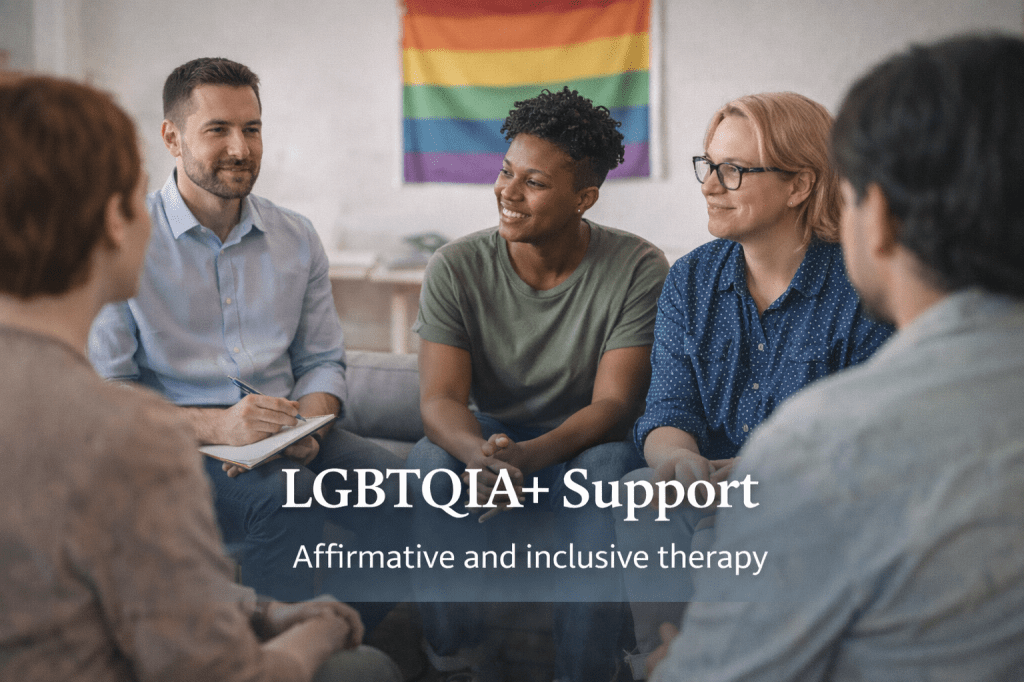
I offer affirmative psychological support for LGBTQIA+ individuals and families, grounded in respect, safety, and a deep understanding of how identity, relationships, and social contexts shape mental health and wellbeing.
My work recognises that distress experienced by LGBTQIA+ people often arises not from identity itself, but from experiences of stigma, minority stress, invisibility, discrimination, or lack of affirmation within families, institutions, and society.
Who Is LGBTQIA+ Support For?
Psychological support may be helpful for:
- LGBTQIA+ adolescents and adults
- Individuals exploring sexual orientation, gender identity, or gender expression
- Trans and gender-diverse people at different stages of self-understanding or transition
- Individuals experiencing anxiety, low mood, or distress linked to identity or social contexts
- LGBTQIA+ people navigating relationships, family dynamics, or life transitions
- Parents and families seeking to better understand and support an LGBTQIA+ family member
Areas of Focus
Support may include work around:
- Identity development and self-understanding
- Gender identity and gender expression
- Coming out processes and disclosure decisions
- Minority stress, internalised stigma, and shame
- Anxiety, emotional regulation, and low mood
- Relationships, intimacy, and communication
- Family acceptance, rejection, or ambivalence
- Intersectionality (e.g. LGBTQIA+ identity alongside neurodivergence, migration, or cultural background)
Approach
My clinical approach is affirmative, systemic, and relational. This means that:
- LGBTQIA+ identities are affirmed and respected as part of human diversity
- Distress is understood in relation to social, cultural, and relational contexts
- Therapy does not aim to change identity or expression
- Space is created for complexity, uncertainty, and non-linear journeys
A systemic perspective allows us to explore how families, relationships, schools, workplaces, and wider social systems influence wellbeing, safety, and identity development.
Format of Support
LGBTQIA+ psychological support is offered primarily:
- Online, providing accessibility, privacy, and flexibility
- On an individual basis (adolescents and adults)
- With families, where appropriate and desired
Sessions are collaborative, respectful, and paced according to each person’s emotional needs and readiness.
A Safe and Affirmative Space
Psychological support aims to provide a space that is:
- Affirming and non-judgemental
- Informed by current clinical and ethical standards
- Attentive to power, language, and lived experience
- Respectful of each person’s pace and self-definition
 Luis Pinheiro - Chartered Clinical Psychologist